
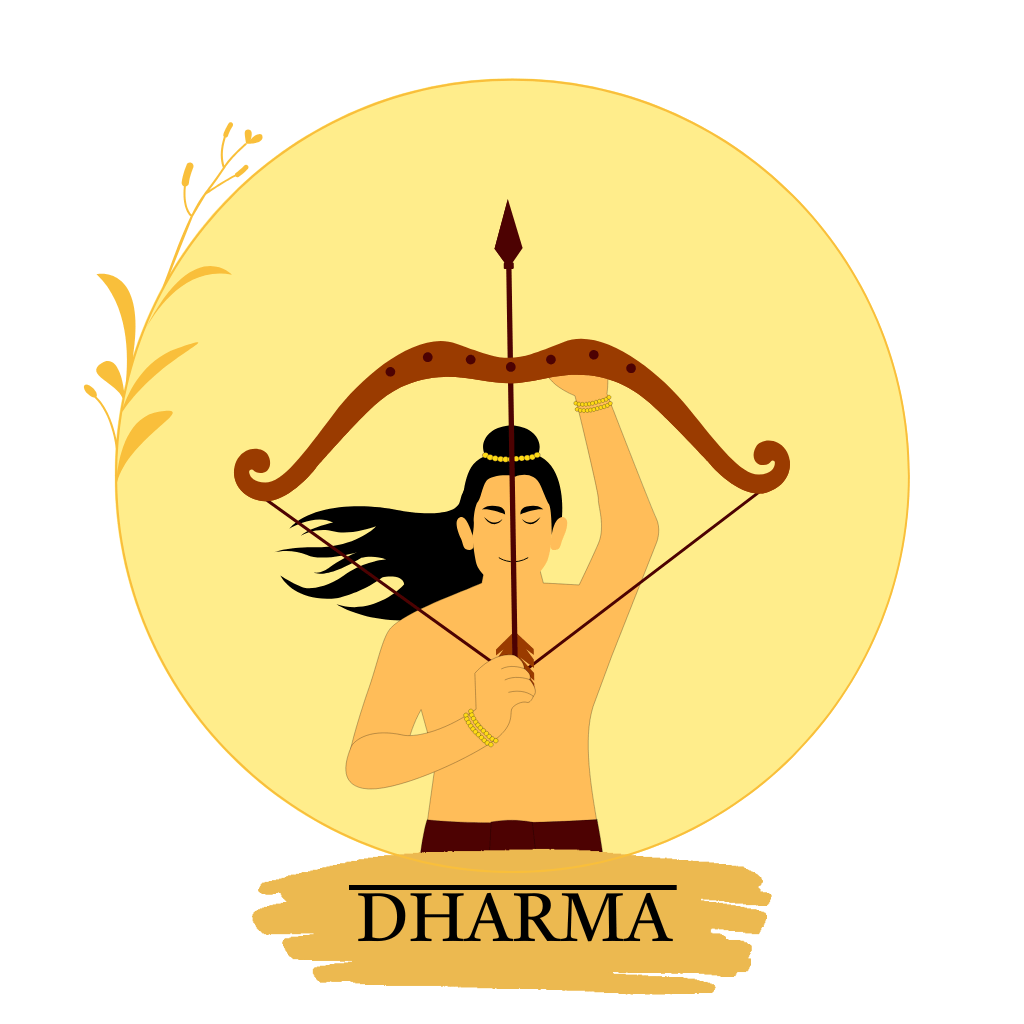
The Kurukshetra war, also known as the Mahabharata war, is often recognized as the fight between two families of the same dynasty, the Pandavas and the Kauravas; however, to label that as such would be oversimplifying the true nature of the battle. The Mahabharata war is more than a mere cousin’s war; it is a battle between good and evil, dharma and adharma.
During the war, Arjuna, a Pandava, experienced a bout of hesitation, nearly withdrawing from the battle. Confronted with the heart-wrenching reality that he would have to fight against his loved ones and be the cause of their demise, he was paralyzed by sorrow. Lord Krishna counseled Arjuna to remember that he is a warrior and that it is his dharma. He reminded Arjuna of his duty to combat unrighteousness, encouraging him to fight for justice without attachment to the outcome. Furthermore, Lord Krishna emphasized that despite the emotional turmoil, Arjuna must uphold his duty and play his part in reinstating dharma.
This conversation between Lord Krishna and Arjuna, during the Mahabharata, is an excellent reflection on the teachings of dharma. The wise words of Lord Krishna impart a lesson that remains relevant throughout all ages of humanity, and which we can learn from even today.
Dharma is one of the central concepts of Hinduism, and essentially Sanatana Dharma. Dharma means duty, one’s goal in life. In today’s world when someone asks what is your dharma? You are more likely to get responses like Hindu or Jain or Christian etc. But there was a time when the meaning of dharma centered on the primary purpose of an individual’s life. Every individual has a purpose, a duty, a life aim.
For example:
- The dharma of a King is to lead and govern
- The dharma of a Guru is to teach students and guide them towards the right path
- The dharma of a Doctor is to help cure and give treatment for people suffering from illness or pain
Dharma is an extraordinary term, as it can’t be accurately translated into any other language without losing some its meaning. Although we often relate it to concepts like religion, righteousness, and duty, none of these words fully capture its true essence.
Whilst Arjuna fulfilled his dharma, his dilemma is a relatable experience for many of us. In today’s world, where adharma prevails, individuals often find themselves compelled to make wrong choices just to survive. In an environment where poor decisions are incentivized and righteous ones are punished, adhering to dharma can be challenging. Yet, it is precisely in these moments that we must recall Krishna’s teachings — to fulfill one’s duty without attachment to the outcome. Whilst this is easier said than done, one thing is certain: embracing dharma lets you live with your head held high, free from the fears of karma and a guilty conscience.
 Hart Diary
Leave a comment