
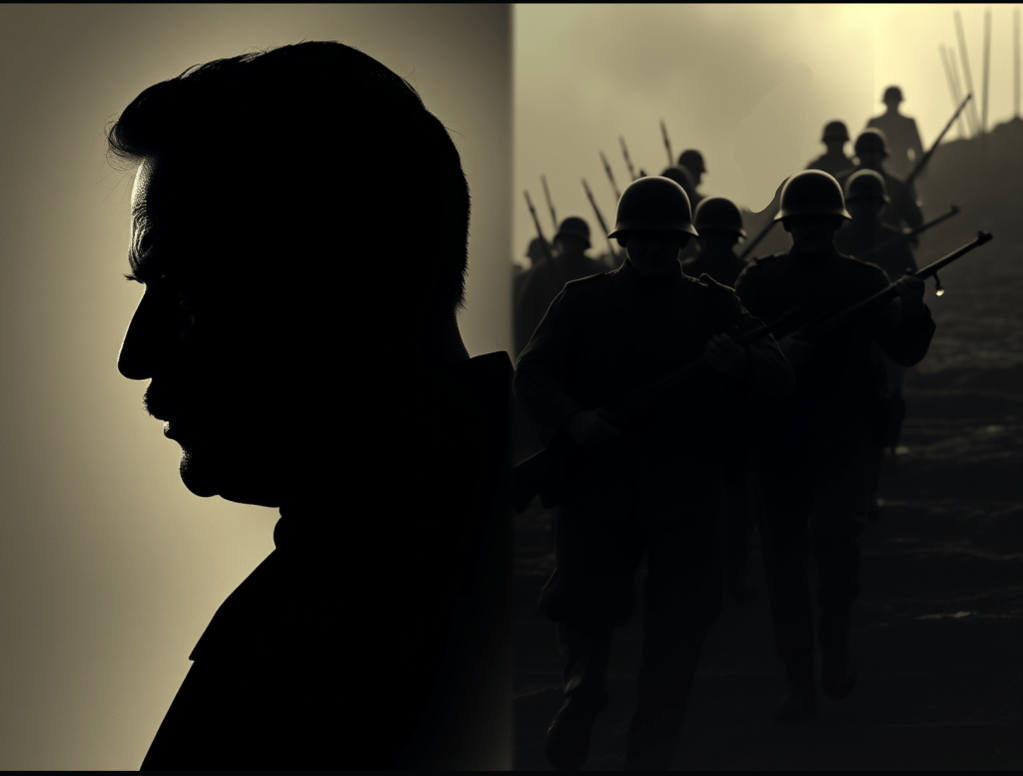
Did the assassination of one man really cause the First World War? On the 28th of June 1914, the Archduke Franz Ferdinand was assassinated by Gavrilo Princip, a member of the Black Hand. Many historians agree that this event alone was not the cause of World War One, but rather was the ultimate trigger in a series of events that culminated in one of the largest global conflicts of the 20th century. WW1 experts believe that a conflict involving many nations was already likely at the turn of the 20th century; tension among the European nations was already at boiling point. Had the Archduke not been assassinated, then another matter probably would have sparked the war. The question to consider is, if the assassination was not the cause of the war, then what was?
The study of the origins of the First World War intrigues many historians, and for decades now, academics have tried to assess the complex factors that led to the outbreak. In this article, we will revisit one of the earlier, lesser-known factors that played a significant role in shaping international relations and global political dynamics, which led to the outbreak of World War One: the German Unification.
Changing power dynamics
Before unifying, Germany consisted of numerous independent states and principalities, including prominent ones like Prussia and Bavaria. The unification of these multiple kingdoms was driven by a strong nationalistic and liberal fervor, as well as the political strategies employed by Otto von Bismarck. Germany unified in 1871. The emergence of a powerful, industrialized nation in the center of Europe significantly altered the balance of power.
After Germany unified, Otto von Bismarck became the first Chancellor, overseeing policies to secure Germany’s position as a dominant power in Europe. The unification already created a shift in power dynamics, which created unease among neighboring nations; this situation was further complicated by Germany’s interest in becoming an imperial power. This increased competition and rivalry among European nations subsequently accelerated the Scramble for Africa, as nations sought to maintain their influence by consolidating their power.
Resentment
During the wars of German unification, France suffered the significant loss of Alsace-Lorraine, a territory rich in resources and of great geopolitical importance. This defeat created deep resentment and animosity in France, as it was not just a territorial loss but also a severe blow to France’s national pride. The humiliation intensified when Germany’s emperor, Wilhelm I, was crowned in the Palace of Versailles, a symbol of French power and grandeur. This loss and humiliation created a strong desire for revenge among the French populace and political leaders, fueling a persistent and bitter enmity towards the newly unified German Empire, which was to later manifest during WWI.
Road to WW1
Germany’s aggressive expansionist policies, the Scramble for Africa, and France’s desire to recover Alsace-Lorraine exacerbated the political climate. These rivalries for dominance led nations to forge alliances to protect their interests. This complex web of alliances and counter-alliances, driven by mutual distrust and a desire for security, set the stage for a long-lasting period of increasing tensions. These circumstances and foreign policies marked the beginning of a tumultuous journey towards a devastating global conflict.
These events demonstrate both the sensitivity and danger of estranged political relations. As we continue to explore the origins of WW1, it is crucial to recognize the multifaceted nature of the conflict. The First World War was the result of a series of events, consisting of various political, economic, and social factors.
 Hart Diary
Leave a comment